Articles
"Aiding and Abetting" in Fine Art Shipping? Stop Hiring Illegal Carriers to Ship Artwork
Shippers can face serious legal, financial, and operational consequences for hiring a carrier that lacks proper federal licensing or operating authority when transporting artwork and high-value goods across state lines
Read More -->

Why Vetting Your Fine Art Shipper Matters
Hiring an unlicensed fine art shipping company in Colorado can put your artwork, reputation, and wallet at serious risk. Here’s what galleries, artists, and collectors need to know.
Read More -->

Understanding Fine Art Shipping Insurance: What You Need to Know
Shipping fine art involves a lot more than just wrapping up a painting and sending it on its way
Read More -->
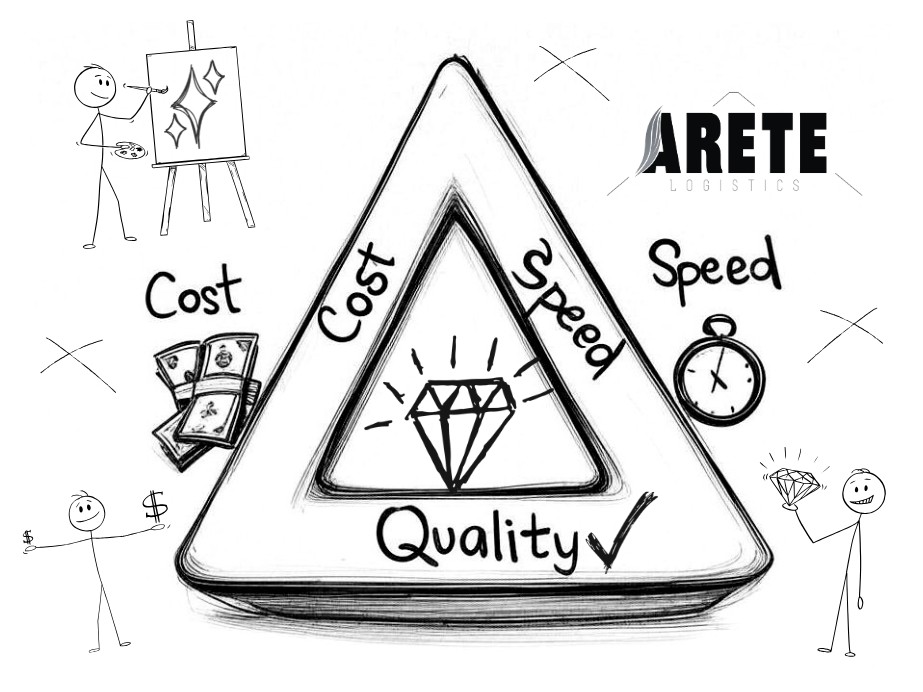
The “Iron Triangle” in Fine Art Shipping: Cost, Speed, & Quality
The “Cost, Speed, Quality” triangle in fine art shipping. What is it and why you can’t have it all.
Read More -->
"Aiding and Abetting" in Fine Art Shipping? Stop Hiring Illegal Carriers to Ship Artwork
Shippers can face serious legal, financial, and operational consequences for hiring a carrier that lacks proper federal licensing or operating authority when transporting artwork and high-value goods across state lines
From Colorado, New Mexico, Utah, Arizona and Wyoming, to Texas, California, New York, Florida, and everywhere in between, hiring federally compliant carriers is especially relevant for those who regularly ship artwork from state to state, regionally across the Rocky Mountain West, and nationwide.
This article breaks down what shippers need to know, what the risks really are, and how to protect yourself, especially if you are shipping fine art, antiques, collectibles or other high-value goods.
Q: Do Small Independent Carriers Need Federal Licensing to Transport Artwork Across State Lines?
👉 Short answer:
Yes! If you hire/pay carriers to transport artwork, they are required to maintain federal licensing/registration.
Carriers operating vehicles under 10,000 lbs GVWR (Sprinter/Transit/Ram vans) are classified as "for-hire" (non-commercial) carriers. They are required to have Operating Authority (MC number) to transport federally regulated commodities across state lines.
Don't let anyone try to convince you otherwise! What transportation law actually says…
In 2026, Operating Authority (formerly known as an MC number) is required for for-hire carriers transporting federally regulated commodities interstate. The key requirement isn’t vehicle weight — it’s whether a carrier is transporting regulated freight for-hire interstate — regardless of vehicle size. The FMCSA (Federal Motor Carrier Safety Administration) defines this as:
👉 Transporting property or passengers for compensation across state lines, and
👉 Moving federally regulated commodities (i.e., non-exempt goods including artwork, antiques, collectibles, furniture and other household goods).
Federal compliance doesn't stop there…
Most states require mandatory Unified Carrier Registration (UCR) compliance for all carriers, regardless of size or commodity being transported.
41 states (including Colorado, New Mexico, Utah, Texas, California & New York) participate in the UCR program, which is designed to enhance accountability by maintaining a centralized record of carriers, ensuring compliance with safety and insurance regulations, and supporting the overall safety of the country's transportation network.
There's just one catch, the only way for carriers to obtain their UCR registration is to have a USDOT number.
Do carriers under 10,000 GVWR who transport artwork interstate need a USDOT number?
Not previously. But that's changing in 2026! As of October 1, 2025, the FMCSA stopped issuing MC numbers and shifted to a USDOT-only identifier system with suffixes indicating authority type. Existing MC numbers still exist in legacy records but are no longer the regulatory identifier going forward.
Q: What Are the Real Risks Shippers Face When Hiring Carriers Who Lack Proper Authority?
👉 Short answer:
Hiring an unauthorized carrier is not a harmless shortcut. Hiring a carrier without proper FMCSA/UCR registration and authority carries serious legal and financial consequences under federal law. It can create real exposure for the shipper, even if the shipment itself is uneventful.
This is a risk that shows up frequently in regional fine art moves throughout Colorado, New Mexico, Utah, Arizona, and Wyoming, where smaller vehicles and independent operators are common.
Are you familiar with "Aiding and Abetting?"
👉 Fact! You do not have to drive the truck to be held responsible for illegal transport.
In federal transportation law, aiding and abetting does not require criminal intent or bad faith. It simply means:
🚩 Knowingly authorizing, permitting, or facilitating transportation that violates federal motor carrier regulations.
If a shipper, gallery, artist, broker, or business knows (or reasonably should know), that a carrier lacks required USDOT registration or operating authority and still hires them, the shipper can be treated as if they committed the violation themselves.
Federal law also treats the actions of employees, agents, or contractors, or anyone acting “on behalf of” a shipper as the actions of the shipper itself. That means a booking decision made by a staff member in Aspen, Santa Fe, Scottsdale, Park City, or Jackson:
👉 An employee booking transport
👉 A manager approving a quote
👉 A gallery assistant scheduling pickup
…can all expose the business to liability if they knowingly engage an unauthorized carrier.
Here are some common examples of "aiding and abetting" in fine art shipping…
🚩 Example 1: Skipping Vetting Carriers to Save Time and Money | 🚩 Example 2: “They’re small, so the rules don’t apply” |
A shipper does not check a carriers USDOT/UCR registration and authority because:
👉 Problem: Failing to verify authority doesn’t shield a shipper from responsibility. The reality is, more often than not the cheapest rates are given by carriers who dodge legal loopholes and forgo federal registration and operating authority. 👉 Risk: Courts and regulators increasingly view this as negligent hiring, especially when public databases make verification easy. | A shipper hires a small, independent carrier using a cargo or Sprinter van to transport artwork and assumes federal rules only apply to large trucks and companies. 👉 Problem: Don't believe the "rules don't apply to us because we're small" talk. Vehicle size does not determine whether operating authority is required. If the carrier is hauling regulated goods for compensation across state lines, federal operating authority is still required. 👉 Risk: The shipper may be deemed to have knowingly facilitated unauthorized interstate transport. |
🚩 Example 3: Mislabeling a For-Hire Carrier as Non-Commercial | 🚩 Example 4: Household Goods and Personal Property |
A carrier describes themselves as “non-commercial,” “private,” or “independent,” but is being paid to move goods interstate. Fact! "Non commercial" doesn't mean not "for-hire," it just means their vehicle is under 10,000lbs GVWR. 👉 Problem: Being paid to transport goods generally makes the operation for-hire, regardless of how it’s described. 👉 Risk: Knowingly accepting that misclassification can be viewed as evasion of regulation, a form of aiding and abetting. | A shipper hires an unregistered carrier to move personal belongings, furnishings, or collections. This frequently affects estate moves, residential art installations, and collector relocations throughout the United States. 👉 Problem: Household goods transportation is subject to stricter federal requirements and higher penalties. 👉 Risk: Penalties for unauthorized household goods transport are significantly higher, and shippers can be pulled into enforcement actions. |
Q: What are the legal and financial consequences for hiring illegal carriers?
👉 Short answer:
When aiding and abetting is established, the consequences can be severe.
👉 Civil Penalties
Federal law allows regulators to impose substantial civil penalties for unauthorized operations. These penalties can apply per violation and escalate when violations are repeated or involve household goods.
👉 Joint and Several Liability
If an accident occurs, injured parties may pursue full recovery from any party involved, including the shipper. This is known as joint and several liability. If the carrier lacks insurance or carries inadequate coverage, the shipper may become the primary financial target. This risk is not theoretical on long-distance regional corridors like I-70, I-25, I-40, or I-10 where incidents can involve multiple jurisdictions.
👉 Insurance Repercussions for Art Shippers Who Hire Unauthorized Carriers
For shippers such as galleries, museums, auction houses, advisors, and institutions, the insurance consequences of hiring an unauthorized carrier often extend well beyond a single denied claim.
Fine art and specialty insurance policies typically assume that transportation will be handled by legally compliant carriers and that the insured will exercise reasonable care in selecting them. When a shipper knowingly, or negligently, hires a carrier that lacks required USDOT registration or operating authority, insurers may view that decision as a failure of due diligence.
This can result in:
👉 Claim denials or reductions, even under all-risk policies
👉 Extended investigations and coverage disputes, delaying payment
👉 Loss of subrogation rights, increasing insurer scrutiny
👉 Higher premiums, reduced transit limits, or added exclusions at renewal
👉 Non-renewal of the policy if a pattern of claims or non-compliance emerges
For professional shippers acting in a fiduciary capacity, such as galleries or museums transporting client-owned or loaned works, these outcomes can damage not only insurance coverage but also client trust and institutional relationships. Even policies marketed as “all-risk” are not immune. All-risk coverage does not mean coverage regardless of how the shipment was handled. Illegality, lack of due diligence, or failure to follow standard industry practices can all be used to challenge coverage.
In short, hiring an unauthorized carrier does not just shift risk to the transporter. It can quietly undermine the shipper’s own insurance protection and long-term insurability.
👉 Out-of-Service Orders and Shipment Delays
If a carrier is stopped during a roadside inspection and found to lack proper authority:
The vehicle can be ordered out of service immediately
The shipment may be stranded or impounded
Delays, storage fees, and recovery costs often fall on the shipper
This is particularly disruptive for time-sensitive art deliveries.
Q: Why Does Not Hiring Illegal Carriers Matter, Especially in Fine Art Shipping?
👉 Short answer:
Fine art shipping carries risks that go beyond typical freight.
Fine Art–Specific Callouts
High declared values
Unauthorized carriers often lack adequate cargo coverage. Even when insurance exists, claims may be denied if the carrier was operating illegally.
Household goods classification
Personal art collections, estates, and residential moves throughout Colorado, New Mexico, Utah, Arizona, Wyoming and beyond are often treated as household goods under federal rules, triggering higher compliance requirements and penalties.
Reputation and fiduciary responsibility
Galleries, advisors, designers, and institutions have a duty of care to their clients. Hiring an unauthorized carrier can damage trust, relationships, and professional credibility, especially in tight-knit regional art communities.
Claims without recovery
Fine art losses are rarely simple. If insurance is void and the carrier is insolvent, the shipper or intermediary may be left absorbing the loss.
Q: How Can Fine Art Shippers Can Protect Themselves?
👉 Short answer:
Before hiring a carrier for interstate transport, research them! It's really quick and easy, here's how:
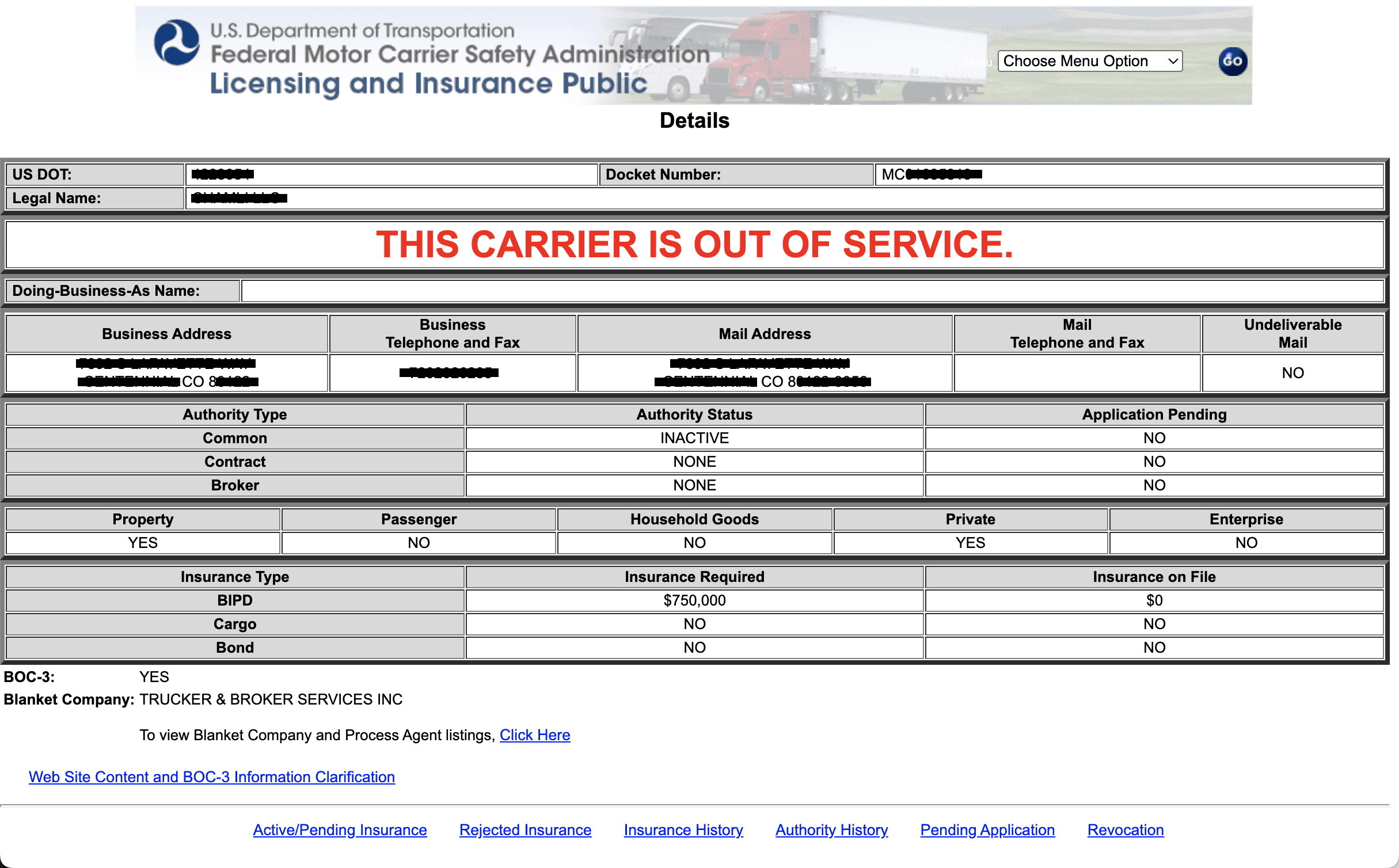
✅ Verify the USDOT number in the "Company Snapshot" via the FMCSA SAFER database
✅ Confirm the carrier has active operating authority for the type of goods being shipped
✅ Review their "Licensing & Insurance" information
✅ If you know their USDOT number, verify the carrier's UCR Registration
✅ Document verification as part of your internal process
Pro Tip: If you don't know the USDOT number, search their name in "Legal Name" and the "State" you believe they're based in.
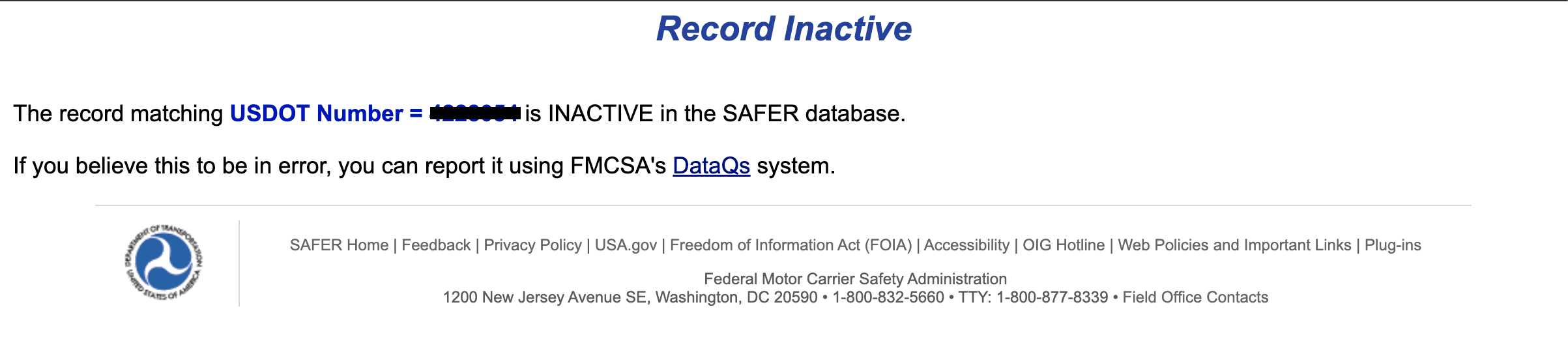
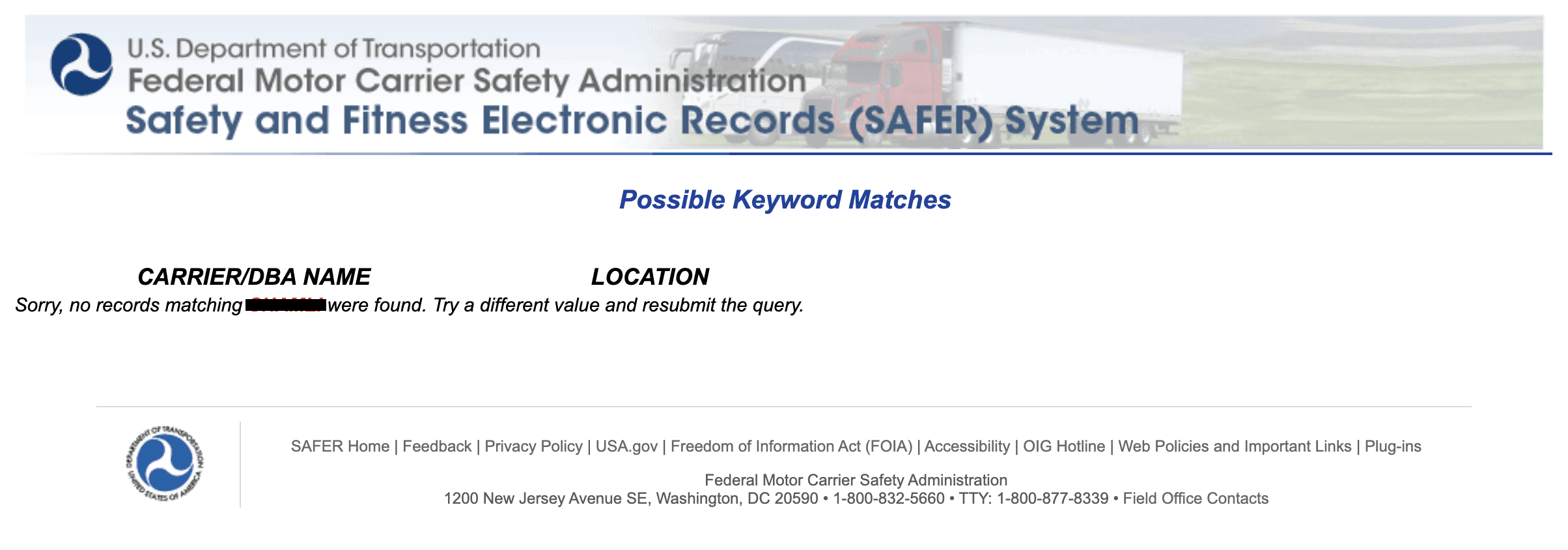
I🚩 If you can't find a carrier in either the "Company Snapshot" or "Licensing and Insurance" searches within the FMCSA SAFER database, they do not have a USDOT number or operating authority.
If something isn’t clear, ask the carrier to provide:
✅ USDOT authority status
✅ Proof of operating authority for the cargo you’re shipping
✅ Certificate of insurance (COI)
Pro tip: With MC numbers being phased out in 2026, vendors must reference the USDOT number with the appropriate suffix you find in FMCSA’s URS or SAFER system.
🚩 Carriers should have no issue providing you with the information you need to verify they are operating legally. If they cannot or refuse, the safest play is to walk away.
The Bottom Line
Hiring a carrier without proper federal registration is not just a carrier problem. It is a shipper problem. Understanding aiding and abetting, verifying authority, and choosing compliant carriers protects not only your shipment, but your business, reputation, and financial stability. When the stakes are high, especially with fine art and high-value goods, shortcuts are rarely worth the risk.
"Aiding and Abetting" in Fine Art Shipping? Stop Hiring Illegal Carriers to Ship Artwork
Shippers can face serious legal, financial, and operational consequences for hiring a carrier that lacks proper federal licensing or operating authority when transporting artwork and high-value goods across state lines
From Colorado, New Mexico, Utah, Arizona and Wyoming, to Texas, California, New York, Florida, and everywhere in between, hiring federally compliant carriers is especially relevant for those who regularly ship artwork from state to state, regionally across the Rocky Mountain West, and nationwide.
This article breaks down what shippers need to know, what the risks really are, and how to protect yourself, especially if you are shipping fine art, antiques, collectibles or other high-value goods.
Q: Do Small Independent Carriers Need Federal Licensing to Transport Artwork Across State Lines?
👉 Short answer:
Yes! If you hire/pay carriers to transport artwork, they are required to maintain federal licensing/registration.
Carriers operating vehicles under 10,000 lbs GVWR (Sprinter/Transit/Ram vans) are classified as "for-hire" (non-commercial) carriers. They are required to have Operating Authority (MC number) to transport federally regulated commodities across state lines.
Don't let anyone try to convince you otherwise! What transportation law actually says…
In 2026, Operating Authority (formerly known as an MC number) is required for for-hire carriers transporting federally regulated commodities interstate. The key requirement isn’t vehicle weight — it’s whether a carrier is transporting regulated freight for-hire interstate — regardless of vehicle size. The FMCSA (Federal Motor Carrier Safety Administration) defines this as:
👉 Transporting property or passengers for compensation across state lines, and
👉 Moving federally regulated commodities (i.e., non-exempt goods including artwork, antiques, collectibles, furniture and other household goods).
Federal compliance doesn't stop there…
Most states require mandatory Unified Carrier Registration (UCR) compliance for all carriers, regardless of size or commodity being transported.
41 states (including Colorado, New Mexico, Utah, Texas, California & New York) participate in the UCR program, which is designed to enhance accountability by maintaining a centralized record of carriers, ensuring compliance with safety and insurance regulations, and supporting the overall safety of the country's transportation network.
There's just one catch, the only way for carriers to obtain their UCR registration is to have a USDOT number.
Do carriers under 10,000 GVWR who transport artwork interstate need a USDOT number?
Not previously. But that's changing in 2026! As of October 1, 2025, the FMCSA stopped issuing MC numbers and shifted to a USDOT-only identifier system with suffixes indicating authority type. Existing MC numbers still exist in legacy records but are no longer the regulatory identifier going forward.
Q: What Are the Real Risks Shippers Face When Hiring Carriers Who Lack Proper Authority?
👉 Short answer:
Hiring an unauthorized carrier is not a harmless shortcut. Hiring a carrier without proper FMCSA/UCR registration and authority carries serious legal and financial consequences under federal law. It can create real exposure for the shipper, even if the shipment itself is uneventful.
This is a risk that shows up frequently in regional fine art moves throughout Colorado, New Mexico, Utah, Arizona, and Wyoming, where smaller vehicles and independent operators are common.
Are you familiar with "Aiding and Abetting?"
👉 Fact! You do not have to drive the truck to be held responsible for illegal transport.
In federal transportation law, aiding and abetting does not require criminal intent or bad faith. It simply means:
🚩 Knowingly authorizing, permitting, or facilitating transportation that violates federal motor carrier regulations.
If a shipper, gallery, artist, broker, or business knows (or reasonably should know), that a carrier lacks required USDOT registration or operating authority and still hires them, the shipper can be treated as if they committed the violation themselves.
Federal law also treats the actions of employees, agents, or contractors, or anyone acting “on behalf of” a shipper as the actions of the shipper itself. That means a booking decision made by a staff member in Aspen, Santa Fe, Scottsdale, Park City, or Jackson:
👉 An employee booking transport
👉 A manager approving a quote
👉 A gallery assistant scheduling pickup
…can all expose the business to liability if they knowingly engage an unauthorized carrier.
Here are some common examples of "aiding and abetting" in fine art shipping…
🚩 Example 1: Skipping Vetting Carriers to Save Time and Money | 🚩 Example 2: “They’re small, so the rules don’t apply” |
A shipper does not check a carriers USDOT/UCR registration and authority because:
👉 Problem: Failing to verify authority doesn’t shield a shipper from responsibility. The reality is, more often than not the cheapest rates are given by carriers who dodge legal loopholes and forgo federal registration and operating authority. 👉 Risk: Courts and regulators increasingly view this as negligent hiring, especially when public databases make verification easy. | A shipper hires a small, independent carrier using a cargo or Sprinter van to transport artwork and assumes federal rules only apply to large trucks and companies. 👉 Problem: Don't believe the "rules don't apply to us because we're small" talk. Vehicle size does not determine whether operating authority is required. If the carrier is hauling regulated goods for compensation across state lines, federal operating authority is still required. 👉 Risk: The shipper may be deemed to have knowingly facilitated unauthorized interstate transport. |
🚩 Example 3: Mislabeling a For-Hire Carrier as Non-Commercial | 🚩 Example 4: Household Goods and Personal Property |
A carrier describes themselves as “non-commercial,” “private,” or “independent,” but is being paid to move goods interstate. Fact! "Non commercial" doesn't mean not "for-hire," it just means their vehicle is under 10,000lbs GVWR. 👉 Problem: Being paid to transport goods generally makes the operation for-hire, regardless of how it’s described. 👉 Risk: Knowingly accepting that misclassification can be viewed as evasion of regulation, a form of aiding and abetting. | A shipper hires an unregistered carrier to move personal belongings, furnishings, or collections. This frequently affects estate moves, residential art installations, and collector relocations throughout the United States. 👉 Problem: Household goods transportation is subject to stricter federal requirements and higher penalties. 👉 Risk: Penalties for unauthorized household goods transport are significantly higher, and shippers can be pulled into enforcement actions. |
Q: What are the legal and financial consequences for hiring illegal carriers?
👉 Short answer:
When aiding and abetting is established, the consequences can be severe.
👉 Civil Penalties
Federal law allows regulators to impose substantial civil penalties for unauthorized operations. These penalties can apply per violation and escalate when violations are repeated or involve household goods.
👉 Joint and Several Liability
If an accident occurs, injured parties may pursue full recovery from any party involved, including the shipper. This is known as joint and several liability. If the carrier lacks insurance or carries inadequate coverage, the shipper may become the primary financial target. This risk is not theoretical on long-distance regional corridors like I-70, I-25, I-40, or I-10 where incidents can involve multiple jurisdictions.
👉 Insurance Repercussions for Art Shippers Who Hire Unauthorized Carriers
For shippers such as galleries, museums, auction houses, advisors, and institutions, the insurance consequences of hiring an unauthorized carrier often extend well beyond a single denied claim.
Fine art and specialty insurance policies typically assume that transportation will be handled by legally compliant carriers and that the insured will exercise reasonable care in selecting them. When a shipper knowingly, or negligently, hires a carrier that lacks required USDOT registration or operating authority, insurers may view that decision as a failure of due diligence.
This can result in:
👉 Claim denials or reductions, even under all-risk policies
👉 Extended investigations and coverage disputes, delaying payment
👉 Loss of subrogation rights, increasing insurer scrutiny
👉 Higher premiums, reduced transit limits, or added exclusions at renewal
👉 Non-renewal of the policy if a pattern of claims or non-compliance emerges
For professional shippers acting in a fiduciary capacity, such as galleries or museums transporting client-owned or loaned works, these outcomes can damage not only insurance coverage but also client trust and institutional relationships. Even policies marketed as “all-risk” are not immune. All-risk coverage does not mean coverage regardless of how the shipment was handled. Illegality, lack of due diligence, or failure to follow standard industry practices can all be used to challenge coverage.
In short, hiring an unauthorized carrier does not just shift risk to the transporter. It can quietly undermine the shipper’s own insurance protection and long-term insurability.
👉 Out-of-Service Orders and Shipment Delays
If a carrier is stopped during a roadside inspection and found to lack proper authority:
The vehicle can be ordered out of service immediately
The shipment may be stranded or impounded
Delays, storage fees, and recovery costs often fall on the shipper
This is particularly disruptive for time-sensitive art deliveries.
Q: Why Does Not Hiring Illegal Carriers Matter, Especially in Fine Art Shipping?
👉 Short answer:
Fine art shipping carries risks that go beyond typical freight.
Fine Art–Specific Callouts
High declared values
Unauthorized carriers often lack adequate cargo coverage. Even when insurance exists, claims may be denied if the carrier was operating illegally.
Household goods classification
Personal art collections, estates, and residential moves throughout Colorado, New Mexico, Utah, Arizona, Wyoming and beyond are often treated as household goods under federal rules, triggering higher compliance requirements and penalties.
Reputation and fiduciary responsibility
Galleries, advisors, designers, and institutions have a duty of care to their clients. Hiring an unauthorized carrier can damage trust, relationships, and professional credibility, especially in tight-knit regional art communities.
Claims without recovery
Fine art losses are rarely simple. If insurance is void and the carrier is insolvent, the shipper or intermediary may be left absorbing the loss.
Q: How Can Fine Art Shippers Can Protect Themselves?
👉 Short answer:
Before hiring a carrier for interstate transport, research them! It's really quick and easy, here's how:
✅ Verify the USDOT number in the "Company Snapshot" via the FMCSA SAFER database
✅ Confirm the carrier has active operating authority for the type of goods being shipped
✅ Review their "Licensing & Insurance" information
✅ If you know their USDOT number, verify the carrier's UCR Registration
✅ Document verification as part of your internal process
Pro Tip: If you don't know the USDOT number, search their name in "Legal Name" and the "State" you believe they're based in.
I🚩 If you can't find a carrier in either the "Company Snapshot" or "Licensing and Insurance" searches within the FMCSA SAFER database, they do not have a USDOT number or operating authority.
If something isn’t clear, ask the carrier to provide:
✅ USDOT authority status
✅ Proof of operating authority for the cargo you’re shipping
✅ Certificate of insurance (COI)
Pro tip: With MC numbers being phased out in 2026, vendors must reference the USDOT number with the appropriate suffix you find in FMCSA’s URS or SAFER system.
🚩 Carriers should have no issue providing you with the information you need to verify they are operating legally. If they cannot or refuse, the safest play is to walk away.
The Bottom Line
Hiring a carrier without proper federal registration is not just a carrier problem. It is a shipper problem. Understanding aiding and abetting, verifying authority, and choosing compliant carriers protects not only your shipment, but your business, reputation, and financial stability. When the stakes are high, especially with fine art and high-value goods, shortcuts are rarely worth the risk.