Articles
How the SCOTUS Montgomery Ruling Impacts Art Shipping Liability
The Montgomery v. Caribe Transport SCOTUS ruling changes how art shipping liability works for galleries, collectors, dealers, museums, and artists. Learn what changed, who's at risk, and how to vet carriers before your next shipment.
Read More -->
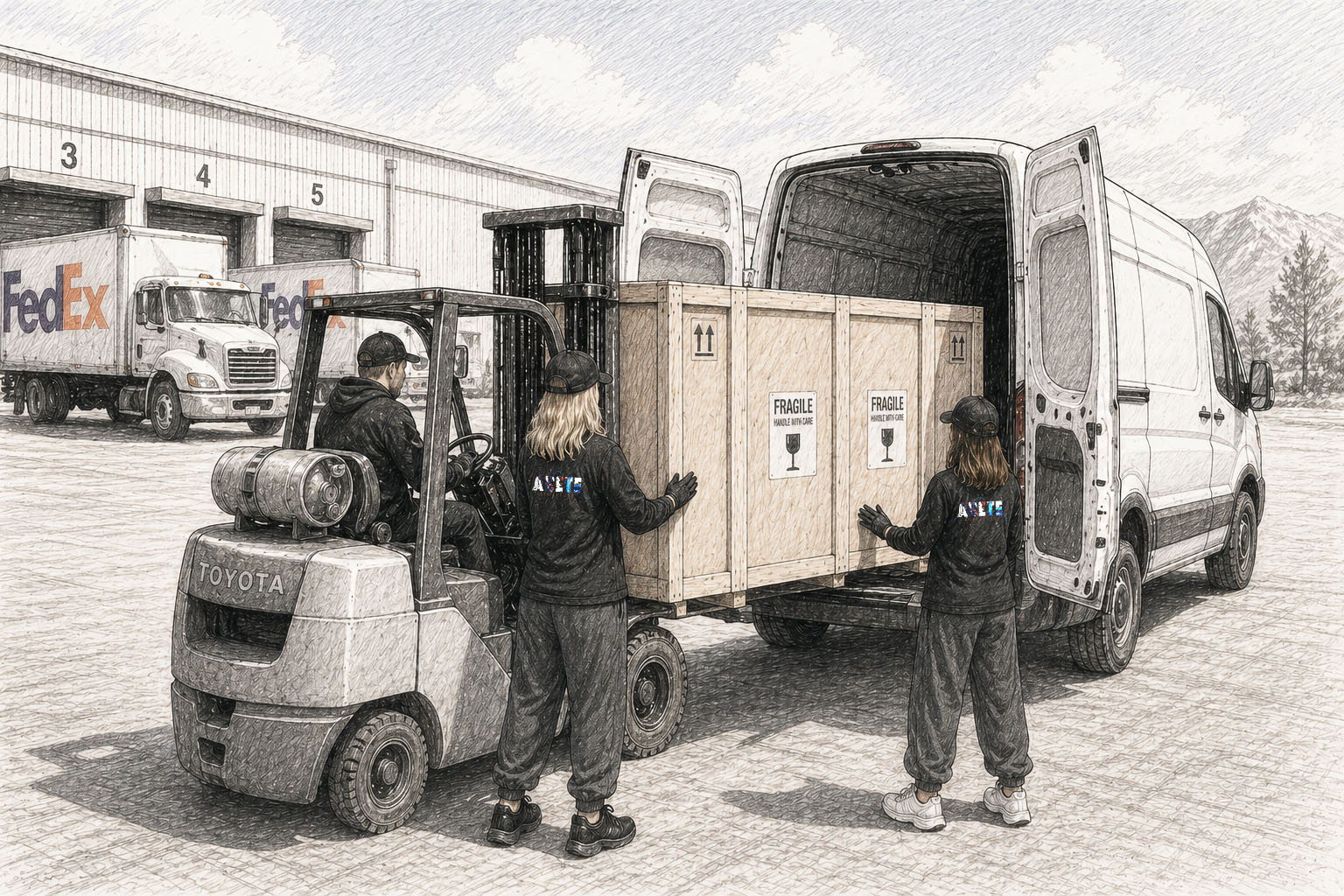
What Is Last-Mile Delivery? A Guide for Remote and Mountain Destinations in Colorado
What last-mile delivery means for fine art shipments — and why remote Colorado destinations like Telluride and Aspen require a different approach.
Read More -->
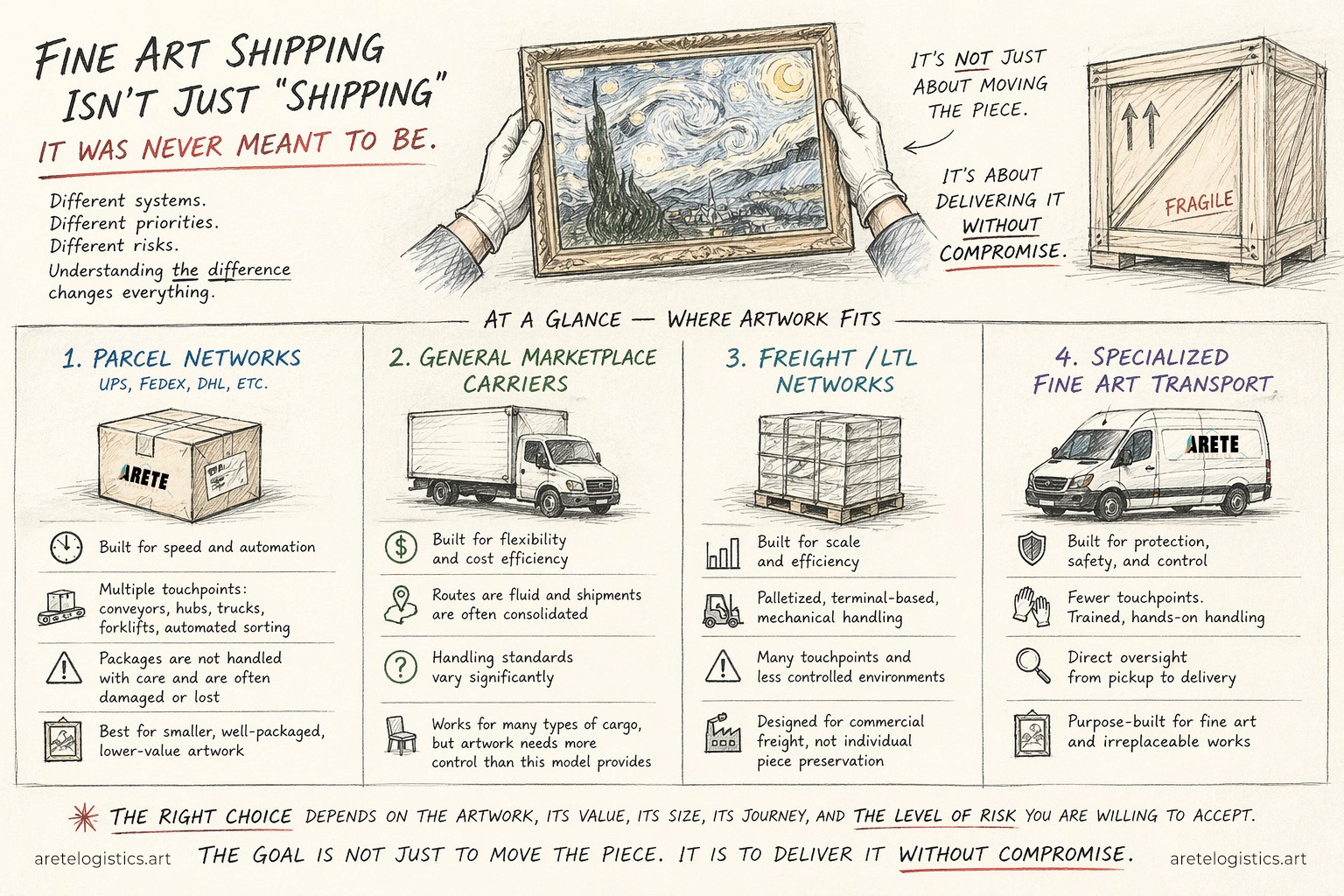
Why Is Fine Art Shipping So Expensive? (And Why It’s Not What You Think)
Fine art shipping costs more than standard freight due to specialized handling, insurance structure, compliance, and risk management. Learn why artwork requires a different level of transport care.
Read More -->
"Aiding and Abetting" in Fine Art Shipping? Stop Hiring Illegal Carriers to Ship Artwork
Shippers can face serious legal, financial, and operational consequences for hiring a carrier that lacks proper federal licensing or operating authority when transporting artwork and high-value goods across state lines.
Read More -->

Why Vetting Your Fine Art Shipper Matters
Hiring an unlicensed fine art shipping company in Colorado can put your artwork, reputation, and wallet at serious risk. Here’s what galleries, artists, and collectors need to know.
Read More -->

Understanding Fine Art Shipping Insurance: What You Need to Know
Not sure if your artwork is actually insured during transit? Learn what all-risk fine art insurance covers, what declared value protection plans don't, and what to ask your art shipper before you ship.
Read More -->

The “Iron Triangle” in Fine Art Shipping: Cost, Speed, & Quality
In fine art shipping, you can't optimize for cost, speed, and quality at the same time. Here's what the Iron Triangle means and how to make smarter trade-offs.
Read More -->
What Is Last-Mile Delivery? A Guide for Remote and Mountain Destinations in Colorado
A closer look at the final stage of shipping logistics for fine art and high-value deliveries to mountain towns, private residences, and destination properties.
What Is Last-Mile Delivery?
Last-mile delivery is the final step in the shipping logistics process. It’s when an item moves from a local hub, warehouse, or receiving point to its final destination.
In many cases, it’s the easy part. A simple handoff from a regional facility to the final destination.
But that assumes the destination is easy to reach.
In rural and remote areas, that’s often not the case.
Limited access, long distances, unpaved roads, travel and vehicle restrictions, seasonal weather, and elevation can all complicate delivery. Add in oversized or heavy shipments, and many standard carriers simply stop short of the final destination. Not all carriers are equipped, or legally authorized to complete that final leg. Learn what federal operating authority actually requires → Items are held at regional facilities, waiting for someone equipped to take them the rest of the way.
That’s where last-mile delivery begins to take on a different role within the broader logistics process.
In mountain towns, private residences, and destination properties, it isn’t simply the final step. It’s what allows the shipment to reach its intended destination at all.
Last-Mile Delivery and High-Value Items
Last-mile delivery starts to look very different when high-value items such as fine art, luxury furniture, collectibles and antiques are involved.
It typically comes into play after a piece has completed the long-haul portion of its journey. It may be sitting at a regional warehouse, a receiving facility, or a carrier terminal, waiting for the final portion of delivery to be arranged.
That final step is where things often become more nuanced.
Unlike standard shipments, artwork and high-value items are not suited for a simple drop-off. They require coordination, careful handling, and a clear understanding of the delivery environment before the truck arrives.
Access can be limited. Residences may be located in remote areas or designed with tight entry points. Buildings often require scheduled delivery windows, elevator reservations, or advance notice. Many pieces arrive in large, heavy crates that are not easily maneuvered without planning.
This is also where major freight carriers, including companies like FedEx, tend to step back. Oversized shipments bound for remote destinations are frequently held at regional terminals, leaving the final leg of the delivery unresolved.
At that point, the shipment has arrived nearby, but not where it needs to be.
This is where last-mile logistics becomes more of a concierge process than a standard delivery.
The focus shifts from transportation to placement. Not just getting the piece to the address, but getting it into the space in a way that aligns with the property, the client, and the expectations surrounding high-value deliveries.
What to Expect During Last-Mile Delivery
Stage | What Typically Happens |
|---|---|
| Shipment moves between cities via freight network |
| Item arrives at facility (Grand Junction, Montrose, etc.) |
| Couriers attempt final delivery |
Common Outcome in Remote Areas | Delivery stops short, item held at terminal |
Last-Mile Delivery | Shipment is collected, delivered, placed, and completed |
Arête Logistics Last-Mile Delivery and Logistics Services
At Arête Logistics, last-mile delivery goes beyond simply completing the final leg of a shipment. It’s a coordinated service focused on bridging the gap between where a shipment can go and where it actually needs to be.
In practice, this means receiving shipments from regional hubs such as Grand Junction and Montrose, as well as larger cities like Denver, Salt Lake City, and Albuquerque, then managing everything required to bring them the rest of the way. This can include scheduled delivery coordination, site-aware handling, navigating challenging access points, and placing the piece exactly where it belongs.
We focus on completing the final stage of delivery for shipments moving into remote residences, mountain towns, and destination properties throughout Colorado, including Telluride, Aspen, and Crested Butte.
Our last-mile services are built specifically for situations where standard delivery options fall short. Remote locations, oversized crates, limited access, and high-value items all require a more thoughtful approach than a typical freight drop-off.
We also understand that timing matters.
While last-mile delivery may be the final leg of the journey, it doesn’t have to be the slowest. Because our schedule is flexible, shipments can often be collected and delivered the same day or the following day once they are ready. The final leg does not need to sit idle at a warehouse waiting for a route to open up. In many cases, we’re able to expedite that final step and keep projects moving without unnecessary delays.
Just as important as the physical delivery is the coordination behind it.
We work directly with galleries, designers, collectors, and manufacturers to align timing, confirm site conditions, and ensure every detail is accounted for before delivery day. That upfront planning reduces surprises, avoids delays, and keeps projects moving forward without unnecessary friction.
And when the piece arrives, our job doesn’t stop at the door.
Crates are opened. Packing materials are removed and cleared. Items are brought into the space and placed where they are intended to live, not where they are easiest to leave. When appropriate, installation is completed at the same time, so the piece is fully settled within its environment.
This integrated approach, combining delivery, white-glove handling, and installation, reflects a more concierge-style model of service. It reduces the need for multiple vendors, limits unnecessary handling, and simplifies the process for clients and their teams.
In areas where access is limited and experienced installers are not always readily available, this level of coordination tends to be less of a luxury and more of a practical necessity.
From the outside, the process appears straightforward. A shipment arrives, is brought inside, and is in place.
Behind the scenes, it is a series of decisions made in advance. Logistics, access, timing, coordination, and handling, all aligned before delivery takes place.
The goal is not to make the process visible. It’s to ensure that, from the client’s perspective, everything simply arrives as it should.
Understanding how the final step works makes it easier to plan for it.
What Is Last-Mile Delivery? A Guide for Remote and Mountain Destinations in Colorado
A closer look at the final stage of shipping logistics for fine art and high-value deliveries to mountain towns, private residences, and destination properties.
What Is Last-Mile Delivery?
Last-mile delivery is the final step in the shipping logistics process. It’s when an item moves from a local hub, warehouse, or receiving point to its final destination.
In many cases, it’s the easy part. A simple handoff from a regional facility to the final destination.
But that assumes the destination is easy to reach.
In rural and remote areas, that’s often not the case.
Limited access, long distances, unpaved roads, travel and vehicle restrictions, seasonal weather, and elevation can all complicate delivery. Add in oversized or heavy shipments, and many standard carriers simply stop short of the final destination. Not all carriers are equipped, or legally authorized to complete that final leg. Learn what federal operating authority actually requires → Items are held at regional facilities, waiting for someone equipped to take them the rest of the way.
That’s where last-mile delivery begins to take on a different role within the broader logistics process.
In mountain towns, private residences, and destination properties, it isn’t simply the final step. It’s what allows the shipment to reach its intended destination at all.
Last-Mile Delivery and High-Value Items
Last-mile delivery starts to look very different when high-value items such as fine art, luxury furniture, collectibles and antiques are involved.
It typically comes into play after a piece has completed the long-haul portion of its journey. It may be sitting at a regional warehouse, a receiving facility, or a carrier terminal, waiting for the final portion of delivery to be arranged.
That final step is where things often become more nuanced.
Unlike standard shipments, artwork and high-value items are not suited for a simple drop-off. They require coordination, careful handling, and a clear understanding of the delivery environment before the truck arrives.
Access can be limited. Residences may be located in remote areas or designed with tight entry points. Buildings often require scheduled delivery windows, elevator reservations, or advance notice. Many pieces arrive in large, heavy crates that are not easily maneuvered without planning.
This is also where major freight carriers, including companies like FedEx, tend to step back. Oversized shipments bound for remote destinations are frequently held at regional terminals, leaving the final leg of the delivery unresolved.
At that point, the shipment has arrived nearby, but not where it needs to be.
This is where last-mile logistics becomes more of a concierge process than a standard delivery.
The focus shifts from transportation to placement. Not just getting the piece to the address, but getting it into the space in a way that aligns with the property, the client, and the expectations surrounding high-value deliveries.
What to Expect During Last-Mile Delivery
Stage | What Typically Happens |
|---|---|
| Shipment moves between cities via freight network |
| Item arrives at facility (Grand Junction, Montrose, etc.) |
| Couriers attempt final delivery |
Common Outcome in Remote Areas | Delivery stops short, item held at terminal |
Last-Mile Delivery | Shipment is collected, delivered, placed, and completed |
Arête Logistics Last-Mile Delivery and Logistics Services
At Arête Logistics, last-mile delivery goes beyond simply completing the final leg of a shipment. It’s a coordinated service focused on bridging the gap between where a shipment can go and where it actually needs to be.
In practice, this means receiving shipments from regional hubs such as Grand Junction and Montrose, as well as larger cities like Denver, Salt Lake City, and Albuquerque, then managing everything required to bring them the rest of the way. This can include scheduled delivery coordination, site-aware handling, navigating challenging access points, and placing the piece exactly where it belongs.
We focus on completing the final stage of delivery for shipments moving into remote residences, mountain towns, and destination properties throughout Colorado, including Telluride, Aspen, and Crested Butte.
Our last-mile services are built specifically for situations where standard delivery options fall short. Remote locations, oversized crates, limited access, and high-value items all require a more thoughtful approach than a typical freight drop-off.
We also understand that timing matters.
While last-mile delivery may be the final leg of the journey, it doesn’t have to be the slowest. Because our schedule is flexible, shipments can often be collected and delivered the same day or the following day once they are ready. The final leg does not need to sit idle at a warehouse waiting for a route to open up. In many cases, we’re able to expedite that final step and keep projects moving without unnecessary delays.
Just as important as the physical delivery is the coordination behind it.
We work directly with galleries, designers, collectors, and manufacturers to align timing, confirm site conditions, and ensure every detail is accounted for before delivery day. That upfront planning reduces surprises, avoids delays, and keeps projects moving forward without unnecessary friction.
And when the piece arrives, our job doesn’t stop at the door.
Crates are opened. Packing materials are removed and cleared. Items are brought into the space and placed where they are intended to live, not where they are easiest to leave. When appropriate, installation is completed at the same time, so the piece is fully settled within its environment.
This integrated approach, combining delivery, white-glove handling, and installation, reflects a more concierge-style model of service. It reduces the need for multiple vendors, limits unnecessary handling, and simplifies the process for clients and their teams.
In areas where access is limited and experienced installers are not always readily available, this level of coordination tends to be less of a luxury and more of a practical necessity.
From the outside, the process appears straightforward. A shipment arrives, is brought inside, and is in place.
Behind the scenes, it is a series of decisions made in advance. Logistics, access, timing, coordination, and handling, all aligned before delivery takes place.
The goal is not to make the process visible. It’s to ensure that, from the client’s perspective, everything simply arrives as it should.
Understanding how the final step works makes it easier to plan for it.